Monday, April 18, 2011

BCHC Newsletter - April 2011

THE CHAMPION

Sasa Logg
in is the Project Director of Skeena Diversity Society, an organization that has set out to make Terrace a more welcoming and inclusive community for all of its members. A dynamic community developer, Sasa wears several “hats” in her community, and in addition to her work supporting immigrants in adapting to their new community, she has also contributed to her community as the coordinator of Terrace’s Make Children First Network. The organization focuses on the development of children aged zero to six, recognizing the importance of early child development, and helping to create a community where children and families are supported and valued.

While Sasa ha
s been involved with Skeen Diversity throughout its ten years of existence, this year marked a milestone when they opened the Skeena Diversity Centre, a place for community members to meet, gather, share ideas and get to know each other. The centre is open 6 days per week, and among other things hosts activities such as community potlucks, movie nights, coffee houses, art shows and community dialogues. Sasa describes the Centre as a hub where Skeena Diversity Society supports and connects community members who have ideas for their community and want to develop new opportunities.

Sasa is an
incredible multi-tasker with seemingly boundless energy, a contagious positive attitude and an abundance of creative ideas. She and her team have carried out a wide array of community building activities, but one of the most exciting is the work they are doing to bring the community together to explore potential opportunities for an old abandoned Co-op property near Terrace’s downtown. Working with the mayor and Council they recently hosted a series of community dialogues to gather community feedback about the site which Sasa hopes could one day become a key community gathering place.

A collaborative leader at heart, and this year Sasa initiated a partnership with BC Healthy Communities and the Centre for Innovative Leadership to offer the Leading Communities program in Terrace. The program is a community leadership training program which works with emerging, potential and experienced leaders in rural communities to develop and enhance their leadership skills for collaborative community action. “If we are going to create a more welcoming and inclusive community” she says, “we need more diverse and inclusive leadership”.

THE PRACTICE

Creating Community Owned Resources: Youthcore.ca
by Sarah Amyot


We recently launched a new Youthcore.ca website to support our Victoria-based youth engagement work. While a website re-launch may not seem to have much to do with effective practice for healthy community development, what I’ve been struck by is how important fostering genuine community ownership has been to the success of our work.

In a context of a highly globalized economy in which the jobs and food that feed our communities are moved further and further afield and many of the decisions that affect our daily lives seem to be made ‘somewhere else’, we find in many communities we work with, people express a sense frustration that locally controlled resources are being removed from the community. Creating and re-building a sense of community-ownership is a fundamental part of any community development process and something we try to model throughout all of our work at BC Healthy Communities and within our Youthcore program.

Youthcore.ca is the online platform for much of our youth work, and it is much more than a website- it is the culmination and manifestation of years of partnership building and mutual support. The site is Greater Victoria's online youth portal- it is all about young pe
ople in the Greater Victoria area connecting, learning and enjoying our communities in safe and positive ways. The site is designed to provide up to date and locally relevant information for youth, service providers and parents. It's full of information - about programs, places, events and resources in Victoria. Since its inception, the site has been heavily used by the community and its usage continues to grow.

The real success of our work is shared by the youth and youth-serving community of Greater Victoria. Margaret Wheatley reminds us that "in organizations, real power and energy is generated through relationships. The patterns of relationships and the capacities to form them are more important than tasks, functions, roles, and positions"- this is true of Youthcore.ca as well. The site was originally developed with the active involvement of teams of local youth who used a process of community asset mapping to assess what r
esources were currently available in the community. The site was, then as now, supported by the local Youth Service Provider Network, a loose alliance of over 300 youth-serving organizations and professionals. Together local youth and youth service providers are responsible for maintaining, updating and expanding the site. Organizations and individual citizens can all log in to add new information, resources or events (currently there are over 600 local youth serving programs and places listed on the site). Unlike traditional resource directories that often go rapidly out of date, this sense of community ownership helps keep the site current and locally relevant. I think in many ways, the success of this website model exemplifies the real dedication and commitment of the youth serving community in the Greater Victoria area.

For more information about this or other emerging practices we’re using in our youth engagement work, please contact Sarah Amyot, Youth Engagement Projects Coordina
tor at youth@bchealthycommunities.ca

EVENTS

Open House! White Rock Arts and Culture Database
White Rock Community Centre
Launch of the Arts and Culture database!!
April 26, 2011, 7:30pm
For more information click here

Northern BC Citizens Series on Health
Northern Health’s Population Health team, in partnership with BC Healthy Communities, is hosting a series of web-based seminars to invite dialogue from a broad representation of Northern communities on specific topics that are critical to improving the health outcomes of northern people. We want grassroots community members, local government representatives, service providers, and others to engage and participate in shared learning
about some specific issues related to health determinants. We hope the discussion that follows will lead to increased civic participation and the emergence of creative partnerships which tackle these challenging issues collectively in ways that will move the North toward healthier outcomes for its communities and citizens.

Webinar! Healthy Schools: Learning Environments That Promote Lifelong Health
When: Thursday, April 28th, 2011.1:30pm-3:30pm PST.
Where: Online webinar
For more information click here


Forum! Healthy by Nature
A forum on the physical & mental health benefits of time spent in nature.
When: September 20 -23, 2011.
Where: Vancouver, BC
For more information click here

THE READINGS

Recreating the World
by Michael Bopp and Judie Bopp

Recreating the World is a comprehensive field guide to sustainable community development. Rooted in more than 20 years of hands-on development work in North America and around the world, it is written to be used by people who are working to bring about change in their own communities, and by professionals working with communities to solve critical human problems.

Recreating the World is really two books woven together. The first is a basic discussion of what human systems transformation is, and what it takes to make it happen. The second is a collection of resources (games, stories, activities, tools) that can be used to teach the basic concepts of the book, either in the field or in a classroom setting.

Tuesday, March 15, 2011

BCHC Newsletter - March 2011

THE NEWS

First, we would like to welcome Sarah Amyot to our BCHC Team. Sarah is our new Youth Engagement Projects Coordinator and is coordinating
YouthCore, the Youth Service Provider Network, the City of Victoria Youth Council and many other exciting youth initiatives. We are happy to have Sarah as part of our dynamic team!!

We have been busy over the past year on the following key projects:

Healthy Communities: An Approach to Action on the Determinants of Health in Canada.
We are working with 16 communities across the nation on documenting best healthy communities practices for chronic disease prevention focused on upstream determinants of health that are risk factors to chronic disease (a national project in partnership with Ontario, Quebec and New Brunswick Healthy Communities networks).
More info click
her
e

Living Life Fully: Youth Take Action for Achieving Healthier Weights in Canada.
In partnership with the
City of Prince George, Northern Health Authority, SCOPE, the Canadian Cancer Society and many community partners, BCHC is taking a for-youth-by-youth approach to addressing healthier weights for children and youth. See recent media

Partnership with S.U.C.C.E.S.S
.
We partnered with S.U.C.C.E.S.S. on several youth-focused initiatives in the lower mainland including our Food for Thought (Abbotsford) and TriCities Arts Door (TriCities) initiatives. In each initiative, we are working with Immigrant and Newcomer youth to build on leadership skills, and support youth in being key leaders, co-designers, co-evaluators and community educators around critical issues such as food security, economic development and arts culture.

Citizens Series Round II
Stay tuned for more information on the upcoming Citizens Series webinars hosted by BCHC in partnership with t
he Northern Health Authority. For information on previous webinars click here


FEATURE ARTICLE

Ethical Space: Bridging the divide for chronic disease prevention
by Jodi Mucha
I was recently in Saskatoon at a meeting hosted by the Coalitions Linking Action & Science for Prevention (CLASP) as part of our national “Healthy Communities: An Approach to Action on the Determinants of Health in Canada” initiative. Day 1 of our session was held at the Wanuskewin Heritage Park where we had the pleasure of being addressed by the Third Vice Chief of the Federation of Saskatchewan Indian Nations (FSIN) responsible for the health portfolio as well as Willie Ermine, Faculty member of the First Nations University of Canada. Abundant throughout both presentations was reference to ‘human communities’, ‘holistic approaches’, ‘empowerment’, ‘contribution’, ‘meaning’ and ‘respect’. Willie Ermine spoke of something that, as a Healthy Communities practitioner, deeply resonated for myself and my national Healthy Communities counterparts. Ethical Space.

What is ethical space? Ethical space is the space between 2 people or 2 societies, or 2 organizations. It is the unspoken, unseen, unacknowledged space in between entities and it is very influential. Borne out of philosophical musings of Roger Poole in his book “Towards Deep Subjectivity”, this space between is essentially the differences between the uniqueness each entity brings--uniqueness given by distinct history, knowledge tradition, philosophy, and social and political reality (Ermine, 2007). The space between, is most cases, is a barrier toward effective collaborations, partnerships, relationships.

There are two key spaces between. The first is at the superficial level, whereby two entities may acknowledge each other with limited depth and understanding and a lack of substance. In many cases, this is the space where day to day business takes place. Paper partnerships, inauthentic collaborations and competition happen in this space. In the other space, deeper level thoughts, interests and assumptions are acknowledged and shared --meaningful dialogue can begin. In this space, conversing, understanding, negotiating and dreaming can take place. In this space, possibilities open up. In this space we collectively ask “What can we create together?”

Coming together through trust, respect and acknowledgement in this ethical space, we can begin to have conversations that matter. Conversations about issues such as the socio-economic conditions that influence the quality of life and development and how that impacts individual and community health. As noted by Dr. McKeown (Health Nexus and Ontario Chronic Disease Prevention Alliance, 2008), “when there are large gaps between the positive and negative factors that influence health, health outcomes are more severe. Inequities create the conditions for complex issues such as chronic disease”.

Fundamental to the Healthy Communities Approach is facilitating a safe space for wide ranging and diverse groups to bring themselves past the borders of the ethical space and exploring the root of complex community issues. Through meaningful dialogue and engagement we can explore fields of thought and how it influences our behaviours. We can bring together our collective intelligences, our experiences, our backgrounds, our ‘uniqueness’ and we can begin to uncover barriers to health creating conditions. Chronic disease is a disease that has touched almost everyone in some way, shape of form. It is all around us. Through opening the space, sharing our stories, removing the barriers and creating together we can move forward. We can make a difference. Rather than impose pre-defined programs and solutions, we can co-create opportunities to empower and enliven for health action. For more information on how BC Healthy Communities is using the Healthy Communities Approach for chronic disease prevention please contact Jodi@bchealthycommunities.ca

Ermine, Willie, 2007. The Ethical Space of Engagement. Indigenous Law Journal.

Health Nexus and Ontario Chronic Disease Prevention Alliance, 2008. Primer to Action: Social Determinants of Health.

THE COMMUNITY

School District 72 and City of Campbell River Collaborating for Climate Action!


On November 3rd staff, teachers, administrators, students and community stakeholders from both the City of Campbell River and School District 72 gathered for a day of learning about local efforts on climate change and opportunities for shared leadership. Both organizations have been taking strong leadership on reducing emissions, engaging stakeholders and moving towards a vision of corporate and community sustainability. This day was a chance to build capacity for shared understanding, commitment and leadership towards an effective climate action strategy for the region. The day was facilitated by BC Healthy Communities and designed to “make the links” between the city-wide community energy and emissions planning and the efforts underway within the School District to reduce their carbon footprint and promote environmental education and leadership. The day ended with a workshop and dialogue for SD72 administration to reflect upon the environmental commitments that have been made, explore how shared leadership between stakeholders can enhance success and discover opportunities for continued engagement and learning.

THE CHAMPION

Community Champion – Lori Bowie B.Sc Kinesiology; MA Health Education/Promotion(Candidate)
Lori is the Community and Recreation Services Manager for the Cloverdale area in the City of Surrey. She has also worked with staff and community members to organize and host a variety of free annual community events including the healthy starts breakfasts, health fairs, and move for health day. Lori passionately supports a variety of other programs such as community kitchen programs led by community partners.

Her portfolio includes being the City wide lead for healthy communities’ initiatives, fitness and weight room services, active living and healthy eating. She is a true health promotion advocate and champion. Lori is a behind the scenes advocate who gets things done! She believes her greatest influence is acting as a mentor for CRS staff and encouraging them to see the community as a great resource and to engage, collaborate and partner in how they do their work. She has also enjoyed the learning that has resulted from working with a variety of community partners and appreciates the benefits of collaboration on complex community issues.

She has worked as a strong supporter of the Surrey/White Rock Food Action Coalition and was a strong supporter of healthier vending machines (within the City of Surrey) and was instrumental in the recreation centers being the distribution sites and sales for South Fraser Harvest Box (a healthy food box program).

One of Lori’s greatest assets is her natural ability to reach out to community partners and co-involve them in initiatives to enhance health and community inclusion. Most recently, she involved community partners in strategic planning for healthy communities’ initiatives, initiating and attending gatherings of community partners and community members to share information, discuss priorities and opportunities for collaboration and partnership efforts. We are fortunate to have such a passionate supporter in the City of Surrey.

She works with staff and community partners to develop and implement a diverse variety of programs to provide social, physically active and healthy eating skills and experiences with a focus on accessible options. She recently played a lead role in crafting a mission statement for Surrey's Community and Recreation Services Division – “Building healthy communities where all people are active and engaged for life”. Her passion reflects her community centred philosophy. On top of this, she is family focused and a mom to two boys and on the side she is finding time (somehow…) to do her Master’s degree.

THE PRACTICE

Youth-Led Evaluation: SUCCESS Impacts Exercise
by Katie Shaw-Raudoy
Over the past six years, the Victoria based YouthCore program has been working collaboratively with numerous partners to develop evaluation tools and processes that are youth-led.

Currently, one of our projects in partnership with S.U.C.C.E.S.S. has yielded a new youth initiative called Student Connections. The group is comprised of eight unique and diverse grade 10 and 11 students who have decided to focus their efforts on engaging their peers to explore more volunteer experiences within their own communities and build greater capacity for social change locally. The project is funded through Welcoming & Inclusive Communities, and while this funder does require specific reporting and evaluation methodologies, the Student Connections group required their own opportunity to develop indicators for success.

Through our work with YouthCore we have been exploring adaptive tools where youth-led projects are able to develop and analyze their own evaluation indicators and processes. A new process – called the SUCCESS Impacts Exercise has been created for the Student Connections group and includes many adapted methods that we have been exploring. Essentially the youth team are given the opportunity to ask themselves: what does success mean, feel, and look like to me personally, for my team/colleagues, for the people we are trying to impact (the student body) and for the community stakeholders (such as teachers, community organizations, community members, citizens).

The process included personal reflection and then group discussions. The team then organized their collective success indicators into specific ambitions for deliverables. The team will use these indicators to develop evaluation tools and strategies (such as questionnaires, video feedback, blogging and journaling) to capture information.

While a facilitator was present to explain the process, support the team with questions or clarifications and also to ensure that a comfortable and resourced space was available to complete the process – it is essential that the youth themselves organize, prioritize and finally select the success impacts they are going to pursue. Maintaining a youth-led environment is essential for meaningful youth engagement.

For more information on this emerging practice or other tools currently being explored and developed by the Youth Division at BC Healthy Communities, please contact Katie Shaw-Raudoy, Provincial Youth Engagement Facilitator, Katie@bchealthycommunities.ca.

EVENTS

Northern BC Citizens Series on Health
Northern Health’s Population Health team, in partnership with BC Healthy Communities, is hosting a series of web-based seminars to invite dialogue from a broad representation of Northern communities on specific topics that are critical to improving the health outcomes of northern people. We want grassroots community members, local government representatives, service providers, and others to engage and participate in shared learning about some specific issues related to health determinants. We hope the discussion that follows will lead to increased civic participation and the emergence of creative partnerships which tackle these challenging issues collectively in ways that will move the North toward healthier outcomes for its communities and citizens.

Save the date:

April 14, 2011.1:30pm-3:30pm PST. Healthy Schools: Learning Environments That Promote Lifelong Health

Another set of webinars will start again this spring.

For more information or to register: bchc@bchealthycommunities.ca

THE READINGS

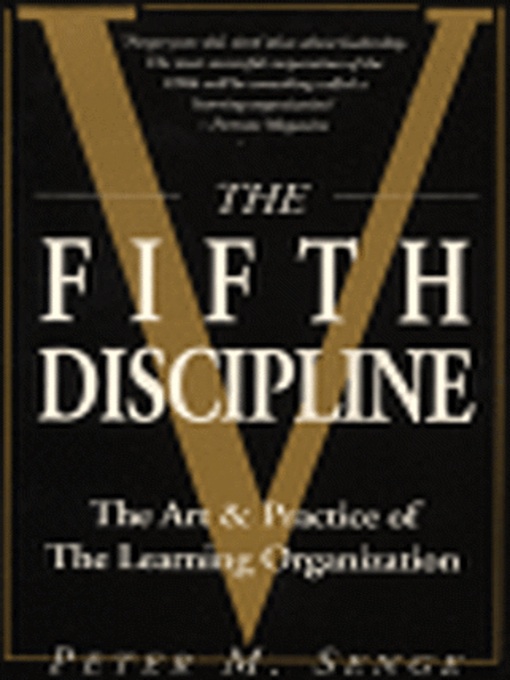
The Fifth Discipline by Peter Senge
Peter Senge's groundbreaking ideas on building organizations have made him a household name amongst corporate managers. His theories help businesses to clarify their goals, to defy the odds, to more clearly understand threats, and to recognize new opportunities. He introduces managers to a new source of competitive advantage, and offers a marvelously empowering approach to work.


Mastery of Senge's five disciplines enables managers to overcome their obstacles to growth and creates brave new futures for them and their companies. The five disciplines are drawn from science, spiritual wisdom, psychology, the cutting edge of management thought, and Senge's own work with top corporations that employ his methods.