Tuesday, June 28, 2011

BCHC Newsletter - June 2011

K
THE NEWS
K
 

Welcome to our summer student Ronnie!
We are pleased to announce that Ronnie Tadesse will be working with BC Healthy Communities as a summer student until August 12th, 2011. Ronnie is a former City of Victoria Youth Council member and SPARK grant recipient. She is currently enrolled as a student at the United World College of the Atlantic in Wales. Ronnie is a natural leader and will be a great addition to the team. She will primarily be working at community events to do outreach to other youth about our programs and opportunities. We're very
happy to have Ronnie joining us!


THE FEATURE ARTICLE

The Healthy Communities Approach and Chronic Disease Prevention
by Jodi Mucha

In Canada today, more than nine million people suffer from some form of chronic disease.
It is estimated that this number could significantly increase as populations age if action is not taken. Growing concern about chronic disease prevention in our society had led us to recognize that a more comprehensive and integrated approach is needed to address the causes of the diseases and we need strategies that extend outside of the health system. The Healthy Communities Approach is an effective, and integrated global model that takes an upstream approach to chronic disease prevention.

The Healthy Communities Approach

The international healthy communities movement originates from the World Health Organization’s
“Healthy Cities” project, launched in 1986. Worldwide, the Healthy Communities (HC) Approach addresses the complex interplay of how the various aspects of health not only shape where we live, but how we live. This worldwide movement is based on the core value of capacity building and empowerment of individuals, organizations and communities and is based on:
  • Multiple and interconnected determinants of health
    (Social, environmental, physical, cultural, economic, psychological, etc)

  • Five key building blocks:
    1. Community/citizen engagement
    2. Multi-sectoral collaboration
    3. Political commitment
    4. Healthy public policy
    5. Asset-based community development
      K
There is recognition of the vital role of all levels of government (local, provincial, national) in creating conditions for health and human development. Also of importance is development of public policy in non-health sectors, policy that explicitly intends to improve community and population health (for example, ‘healthy’ policies developed by transportation and housing). Tapping into the positive assets of a community and building on the existing strengths and capacities of a community’s people, organizations, institutions and its physical assets is also key to overall community success.

Integrated Action for Chronic Disease Prevention
Research indicates there is an overall consensus on the seven chronic diseases which have the greatest effect on our populations mortality rate. These diseases include: cardiovascular diseases, cancer, diabetes respiratory diseases, arthritis, hypertension and mood disorders. Recent statistics and evidence also indicate that these diseases tend to co-occur and in fact, more than one-third of persons affected suffer from two or more forms of these diseases.

Chronic disease prevention is a complex community challenge—one that requires thinking and action that supports the complete state of health (physical, mental, social), which goes beyond the mere absence of disease. Healthy communities activities are inclusive community processes that encompass: 

a) an area-based development strategy that supports communities to have a greater role in their health and well-being,
b) preventative action on health determinants that encompass common risk factors to chronic diseases, and
c) inspiring change for overall improvement of population health that includes collaboration amongst a wide range of sectors.
K
Taking integrated action on the determinants of health entails consideration of a range of community issues including income and social status, social support, literacy, employment, physical and social environments, personal health practices and coping skills, health services, gender, culture and healthy human development. Bringing multi-sectoral communities together to collaborate around a common vision for a shared future is one effective way for communities to grow and thrive in a health promoting way- an approach that is an upstream, proactive approach to chronic disease prevention.
kdsngjlskgkm 

THE COMMUNITY
K
Prince George, BC
by Jodi Mucha
k

Last year, the City of Prince George completed my PG, an Integrated Community Sustainability Plan (ICSP). This plan captured the results of extensive public and stakeholder engagement aimed to create a vision of the long-term future of Prince George and outline what is needed to achieve this vision. Six of the top ten goals were social goals. Overall, residents of Prince George indicated they wanted a community that supports and encourages health and wellness for all. Youth was identified as one of the important aspects of this vision. health and wellness for all. Youth was identified as one of the important aspects of this vision.
In early February 2011, the City of Prince George partnered with BC Healthy Communities, the Northern Health Authority, the Canadian Cancer Society, Sustainable Childhood Obesity Prevention through Community Engagement (SCOPE), and a range of community groups such as the Storytellers Foundation as well as local schools to take specific youth engagement action around achieving healthier weight in children and youth. This project, funded by the Public Health Agency of Canada, will allow youth in Prince George to build skills in participatory action research, and develop a range of leadership skills around working together towards achieving healthier weights for children and youth in rural communities.
THE CHAMPION

Multicultural Youth Take on Homophobia in 'My Forbidden Disorder'
by Sarah Amyot

When Koyume Fukushima, age 17, was at her home in Japan, one of her friends revealed his sexual identity as being gay. The students in her school, including her, ostracized and ignored him until he changed schools. When Koyume came to Victoria as an international student, she realized the injustice of her actions. “I saw this [same-sex] couple walking down the street and thought, ‘Wow, they look so beautiful.’” She was determined to make amends and raise awareness about homophobia here in Victoria as well as at home in Japan. Although English is her second language and she had no prior experience with theatre, Koyume wrote ‘My Forbidden Disorder,’ a play that is both sophisticated and heart-breaking.

Koyume teamed up with five other multicultural youth to produce ‘My Forbidden Disorder.’ The diverse cast of youth comes from Japan, the Philippines, Mexico and Canada. Though they all grew up with divergent cultural perspectives on same-sex relationships, all the youth agree that homophobia is a problem that needs to be dealt with. They invited youth from the South Island Pride Community Centre Society to be involved in the production and a truly youth-led project was born. With the support of a small youth- action grant (called SPARK grants) from BC Healthy Communities’ YouthCore program, and in-kind support from several other community partners, the youth were recently able host a ‘standing room only’ two- night engagement for over 150 parents, friends, and community members. The play is a powerful tool that illustrates the disastrous effects of homophobia in a way that speaks to the youth and adults in our community and a poignant example of the power of ‘learning to lead through action’.

If you live in the greater Victoria area and have an idea for a youth-led change project you may be eligible for support through the BC Healthy Communities’ SPARK: Learning to Lead Through Action program. For more information contact Sarah Amyot, Youth Engagement Projects Coordinator at youth@bchealthycommunities.ca to discuss your idea. To learn more about the Victoria Immigrant and Refugee Centre Society visit their website.
 
THE PRACTICE
K

Juicy Collaborations?

by Deirdre Goudriaan

At BC Healthy Communities, we have the good fortune of supporting others with collaboration and we also collaborate and partner ourselves. Just notice the top leadership books, the headlines, the proposals and the business literature and you will notice collaboration appears virtuous and yet sometimes it appears easier to discuss collaboration than accomplish it.
 
The focus on benefits of collaboration could lead one to think that collaboration is a favoured approach in the world in our desire to improve health outcomes; lead organizations more effectively, improve community development practice, educate future professionals, and conduct health care research. Unfortunately, interdisciplinary collaboration as a practice norm is relatively rare out there and so I sense some great fortune for us to be on the frontiers of great collaboration.
 
Lately, I have been pondering why some collaboration just flourish (become juicy!) and others seem to fizzle…more on that in a moment. Before we look at those themes though it is equally imperative to look inside and explore our internal dialogue about collaboration. What is your inside story? Does it conjure up images of loss of control and fear? How about hostility and conflict and never really getting your needs met? Or does it create an image of a better community and world? Does it value multiple perspectives and believe that “we are better together”? Try to consider the story you are bringing to the table the next time someone asks you to collaborate – can you bring your best self forward? Can you acknowledge your fears and the loss of control? We can all be better collaborators just by taking this step.

So….after reflecting on my experiences and picking the brains of others who view collaboration just as importantly as we do, some themes are emerging. These are not the only factors or even the most important factors and they are intended to stimulate thinking and dialogue. We are not “done”, these factors will change, shift and grow over time just as we hope to do!


1. Spend time learning about your values and underlying assumptions about the project.
Many people have an “inside story” about the project and these values and assumptions will impact the project so in my opinion it is ideal if you can explore and investigate them sooner than later.
 
2. We need to suggest to funders (or better yet involve them)when they expect collaborative proposals that to be more effective collaborators, we need the time to do really meaningful development work in the front end of proposal development. This sets the groundwork for when the project is awarded and is such an important element to ensure you begin the collaboration on the right foot.
 
3. Learning and better yet reflection about our learning needs to be incorporated if we hope to gain collective ground during the collaborative process. Reflective processes help you to move forward with personal and collective development.
 
4. Make sure each partner has something substantive and necessary for the project so they remain engaged and see the importance of their continued commitment. Great collaborative groups learn from one another and are involved and engaged.
 
5. Spend time thinking about how to make good and effective decisions in collaborations. Some practices for better decision making include Holacracy, Wikis and Thought Stream, let’s consider other options that take us beyond consensus building. We need to get better at making integrated decisions and these tools are helping.
 
6. Conflict when managed well is a sign of growth, trust and reciprocity. Conflicts are bound to arise and in fact this can lead to unveiling new perspectives and possibilities that had not been considered previously.
 
7. We need to expect and empower people to effectively respond to change – if there is one thing we have learned it is that change has become a key driver in collaboration and our collective performance.
 
We are all voyageurs in the new frontier of collaborative practices, decision making and improving outcomes for people in our communities and the world. Let’s explore together and please share your ideas (the inside ones or the outside ones) since we are whole people in the whole community! Please contribute your thoughts, lessons, ideas, or conflicts about collaboration? I would love to hear them! Email me at: Deirdre@bchealthycommunities.ca 

EVENTS

Forum - Healthy by Nature ~ Vancouver
What:
A forum on the physical & mental health benefits of time spent in nature.
When:
September 20 - 23, 2011
Where:
Creekside Community Recreation Centre (map)
For more information click here

Webinars - Northern BC Citizens Series on Health Webinars
BCHC and Northern Health's Population Health Team have partnered to host a series of free web-based seminars on the role of citizens in building healthy communities. The webinars invite dialogue from northern communities on specific topics that are critical to improving the health outcomes of northern people. Grassroots community members, local government representatives, service providers, and others are invited to engage and participate in shared learning about a range of specific issues related to health determinants. For more information click here

Save the dates!
Oct 15, 2011 - 1:30 - 3:30pm  Reading Between the Lines: How Libraries and Literacy Contribute to Health

Jan 19, 2012 - 1:30 - 3:30pm  Beginning With the End in Mind: Creating Safe and Nurturing Environments for Our Very Young
April 19, 2012 - 1:30 - 3:30pm Beyond the Nest Egg: Feathering the Nest for Healthy Retirement


THE READINGS

The Story of Stuff - The Book
Author: Annie Leonard

We have a problem with Stuff. With just 5 percent of the world's population, we're consuming 30 percent of the world's resources and creating 30 percent of the world's waste. If everyone consumed at U.S. rates, we would need three to five planets! 

This alarming fact drove Annie Leonard to create the Internet film sensation The Story of Stuff, which has been viewed over 10 million times by people around the world. In her sweeping, groundbreaking book of the same name, Leonard tracks the life of the Stuff we use every day—where our cotton T-shirts, laptop computers, and aluminum cans come from, how they are produced, distributed, and consumed, and where they go when we throw them out. Like Rachel Carson's Silent Spring, The Story of Stuff is a landmark book that will change the way people think—and the way they live. To read more click here

Monday, May 30, 2011

BCHC Newsletter - May 2011


THE NEWS

k
Climate Action Services
BC Healthy Communities (BCHC) is proud to announce the launch of our new and innovative set of services to support emerging learning and training needs for those leading action on climate change! We offer 3 key services:  ½ day, 1 day, and multiple day Workshops on Community Engagement for Climate Action, Climate Change and Behaviour Change and Local Government Climate Action Bootcamps, Leadership Development Training specific to Collaboration for Climate Action, and Climate Engagement Processes designed to meet your specific climate change and sustainability needs.  For more information click here

Job Posting: Assistant Youth Engagement Facilitator
BCHC is currently looking for a dynamic, energetic and organized young person to join our YouthCore Outreach Team as an Assistant Youth Engagement Facilitator. In this position you will assist in creating youth engagement events and leadership training for youth in the Greater Victoria community and be responsible for peer- to- peer outreach throughout the Capital Regional District (CRD) to generate awareness of the YouthCore Program and the City of Victoria Youth Council.  Are you outgoing and friendly, between the ages 15-30,  and interested in working with other youth? If so then please send your application to: youth@bchealthycommunities.ca by 4pm June 7, 2011. Note that this position requires a flexible schedule, evening and weekend work is required. In addition, you must be willing to travel locally for this project. For more information about this job posting click here

THE FEATURE ARTICLE
k
Rising to the Challenge:  Building Leadership for Climate Action
by Kerri Klein
k
In June BC will celebrate the achievement of becoming the first jurisdiction in North America that has a carbon neutral public sector.  But, what does this mean?  Since 2007 all public sectors have been taking action to reduce emissions within their own operations.  They have established a baseline to track greenhouse gas (GHG) emissions and they have reduced GHGs within their own buildings, vehicle fleets and organizational activities. The leadership that is being developed in each sector not only has the potential to reduce emissions, but equally important, has the potential to influence large scale change towards more sustainable futures.  At BCHC we are particularly interested in what kind of change-making capacities communities will need as they scale up planning and actions to reach ambitious emission reduction targets in the years to come.

We know that not all approaches to leading change are the same.  Responding to climate change will require multiple approaches, capacities and strategies. In their book Immunity to Change, Robert Kegan and Lisa Lahey talk about two distinct approaches to type change-making: 

1) Technical Change:  A technical approach to influencing change is appropriate when the problem is clearly defined, the solution is apparent and the appropriate skills can be learned.  Often, our current way of thinking is sufficient to address the complexity of the challenge. What is needed to influence change is technical expertise and leadership.  The goal is to respond to a problem within the current system, not to change the system itself.

2) Adaptive Change:  Adaptive change-making is required when the complexity of the problem cannot be addressed by only technical solutions.  These types of problems require us to be able to see interconnections, larger influences and assess root causes. Often our current patterns of thinking are insufficient to address the problem and innovation is required to develop an effective solution.  In this case, we address problems by looking at the system as a whole.  Einstein’s familiar saying is fitting here: “we can’t solve problems using the same level of thinking we used to create them”.

In responding to climate change, technical change is certainly an important aspect of responding to the challenge.  Indeed, organizations and local governments have been building their technical capacity in many realms from planning to engineering to green building.   And, as local governments set their sights on significantly reducing community-wide emissions there is a need to expand our change-making tool-kit beyond only technical approaches.  Change-making approaches must be able to account for a diverse array of technological, social, behavioural and political considerations.   

BCHC offers workshops, training and leadership development opportunities for supporting communities to respond to the challenge of climate change.  Specifically, we support change-making strategies that involve meaningful engagement, behaviour change and cross-sector collaboration.  To learn more about how we can support your community, click here

References: Kegan and Lahey (2009), Immunity to change: How to overcome it and unlock the potential in yourself and your organization.


THE COMMUNITY
 
Collaborative Leadership Development in Terrace, BC

Community collaboration is at the heart of BCHC’s capacity building work, and this year BCHC is excited to be partnering with the Centre for Innovative & Entrepreneurial Leadership (CIEL) and Skeena Diversity Society to deliver Leading Communities BC in Terrace.  Leading Communities is a leadership training program for rural communities, designed for groups of learners who are all from the same community. Participants enhance their leadership capacities, deepen their understanding of community issues and opportunities, and develop relationships and skills for community collaboration. Diversity is key to deepening relationships among the participating community members, and in Terrace the cohort is made up of 14 people from a variety of areas of community life, different age groups, cultures, and all levels of leadership experience.

One of the unique aspects of this model is that it is delivered on-site in rural communities, rather than requiring participants to travel to a larger centre.  In Terrace, the training was customized to be delivered one weekend per month over 3 months between January and March this year, with the cohort now working on their “leadership practicum”. In order to put their learning into action, the group is now in the process of developing two collaborative community projects which include the development of a seasonal Night Market for the community, and a range of intergenerational community activities aimed at bringing different age groups together. For more information on the program click here, or to watch a short video about it click here
 
THE CHAMPION
k
Bill Beatty, S.U.C.C.E.S.S.

Bill Beatty is the Project Director of the Business and Economic Development Division of S.U.C.C.E.S.S. and Associate Faculty member at Trinity Western University in the Leadership Program.  Bill is modest about his achievements and is passionate about his home community, Abbotsford. Anyone who has had the pleasure of working with Bill knows his passion lies in community development projects that require collaboration and most recently he led several Welcoming and Inclusive Communities and Workplaces projects supporting immigrants and newcomers.

Bill brings a naturally collaborative way of being to his work and demonstrates this through his continual outreach efforts including peer coaching for the Communities Collaborating Institute and Tamarack Institute for Community Engagement. He is often overheard extending open invitations to others interested in working together to address issues that impact the health and well-being of our communities. He is a skilful leader and brings a wealth of evaluation and community development expertise to his work.

His other favourite activities include social enterprise development, entrepreneurial and employment program development. His passion and enthusiasm for this work often keeps him developing new ideas and supporting others to do the same.  In spite of his busy job, Bill also remembers to slow down to enjoy the ride and can often be spotted snapping photographs of the beautiful scenery that surrounds us, climbing the mountains, running marathons and enjoying time with his family. He clearly embodies the whole person in the whole community.  
 
THE PRACTICE
 
Community Safety and Chronic Disease Prevention
by Jodi Mucha

One critical determinant of health is the social environment, which includes social stability, recognition of diversity, safety, good working relationships, and supportive systems. Key to any healthy community is community safety-- and community safety initiatives include priority on violence prevention.  Violence is a preventable public health issue and evidence shows that good violence prevention strategies can also help to reduce incidence of chronic disease.

There is a growing body of evidence that indicates how community safety issues such as violence take an extensive toll on the broad health of individuals, families and communities.  Some such health impacts include changes to food choices and physical activity, asthma, heart disease and hypertension, ulcers, diabetes, neurological and musculoskeletal diseases and even lung disease. As an example, in many communities where there are violence and safety concerns, parents are less likely to allow their children to be physically active outside or walk to school. Violence and the fear of violence can significantly impact eating patterns, choice of foods eaten and can undermine attempts to improve nutrition and activity levels.  In addition, research conducted in the US has shown that increased exposure to violence and fear of violence is directly related to higher incidences of significant symptoms related to asthma (brought on by increased stress and anxiety), unhealthy behaviours as coping mechanisms (such as smoking, eating disorders, and substance abuse) and poor sleeping habits. 

Violence happens in multiple forms including but not limited to community/street, gang, gender, intimate partner, intergenerational, sexual, school and structural violence.  To create safe, healthy, resilience communities and thus affect individual and community health it is important to identify contributing factors that lead to violent activities in the first place.

Basic strategies that have demonstrated success in reducing violence include:

  1. Creating Safe Spaces in Communities for Social Connections where community members have easy access and are able to engage with one another, learn, share and experience a sense of place, space and belonging. 

  1. Access to Cultural Experiences and increasing Cultural Competency can result in the development of new skills, improved informal and formal learning, increased self-confidence and improved social networks (research indicates links between participation in arts, culture and sport and a reduction in offending behavior). 

  1. Positive Youth Development Opportunities such as youth development and essential community conditions that promote social inclusion where youth can achieve their fullest potential

  1. School and Community Programs using the school as a community and hub model using anti-bullying and harassment programs and restorative justice models

  1. Increased Coordination and Communication to violence prevention is essential- bring together multi-sectoral groups to collaborate on strategies and innovative ideas for action- build on existing communications, asset-based approach.

  1. Economic Development Opportunities that help to support training for families and youth most at risk of violence

For more resources click here
k
EVENTS
k
Discussion - Vancouver's Transportation Future... in Facebook!
What:
Vancouver drivers, bicyclists, pedestrians and transit riders are invited to a Facebook event to give advice to the City of Vancouver and learn about the future of transportation in the city.
When: Sign up closes May 31st!
Where: Facebook 
For more information about this event click here
k
Workshop - Reflection on Action ~ Prince George
What: Join us for a one day workshop on reflection-on-action, delivered by the Storytellers’ Foundation. You will explore theories on reflection and change and identify the governing variables that influence your practice.
When: Friday June 17, 8:30 AM - 4:00 PM
Where: Prince George Native Friendship Centre (map)
Cost: $90.00 (incl. HST). Lunch included
To find out more about this event or to register please visit the BCHC website 

Forum - Healthy by Nature ~ Vancouver
What: A forum on the physical & mental health benefits of time spent in nature.
When: September 20 - 23, 2011
Where: Creekside Community Recreation Centre (map)
For more information click here

THE READINGS
k   
The Economics of Happiness: Building Genuine Wealth
Author: Mark Anielski

We all know that money can’t buy you love or happiness, but we have been living our lives as though the accumulation of wealth is the key to our dreams. Why, in spite of increasing economic prosperity over the past fifty years, are many conditions of well-being in decline and rates of happiness largely unchanged since the 1950s? Why do our measures of economic progress not reflect the values that make us happy: supportive relationships, meaningful work, a healthy environment, and our spiritual well-being?

Economist Mark Anielski developed a new and practical economic model called Genuine Wealth to measure the real determinants of well-being and help redefine progress. Anielski’s road map toward this vision of flourishing economies of well-being will resonate with individuals, communities, and governments interested in issues of sustainability and quality of life. To find out more click here

Mark Anielski is an ecological economist and president of his family-owned corporation, which specializes in the economics of well-being.

Monday, April 18, 2011

BCHC Newsletter - April 2011

THE CHAMPION

Sasa Logg
in is the Project Director of Skeena Diversity Society, an organization that has set out to make Terrace a more welcoming and inclusive community for all of its members. A dynamic community developer, Sasa wears several “hats” in her community, and in addition to her work supporting immigrants in adapting to their new community, she has also contributed to her community as the coordinator of Terrace’s Make Children First Network. The organization focuses on the development of children aged zero to six, recognizing the importance of early child development, and helping to create a community where children and families are supported and valued.

While Sasa ha
s been involved with Skeen Diversity throughout its ten years of existence, this year marked a milestone when they opened the Skeena Diversity Centre, a place for community members to meet, gather, share ideas and get to know each other. The centre is open 6 days per week, and among other things hosts activities such as community potlucks, movie nights, coffee houses, art shows and community dialogues. Sasa describes the Centre as a hub where Skeena Diversity Society supports and connects community members who have ideas for their community and want to develop new opportunities.

Sasa is an
incredible multi-tasker with seemingly boundless energy, a contagious positive attitude and an abundance of creative ideas. She and her team have carried out a wide array of community building activities, but one of the most exciting is the work they are doing to bring the community together to explore potential opportunities for an old abandoned Co-op property near Terrace’s downtown. Working with the mayor and Council they recently hosted a series of community dialogues to gather community feedback about the site which Sasa hopes could one day become a key community gathering place.

A collaborative leader at heart, and this year Sasa initiated a partnership with BC Healthy Communities and the Centre for Innovative Leadership to offer the Leading Communities program in Terrace. The program is a community leadership training program which works with emerging, potential and experienced leaders in rural communities to develop and enhance their leadership skills for collaborative community action. “If we are going to create a more welcoming and inclusive community” she says, “we need more diverse and inclusive leadership”.

THE PRACTICE

Creating Community Owned Resources: Youthcore.ca
by Sarah Amyot


We recently launched a new Youthcore.ca website to support our Victoria-based youth engagement work. While a website re-launch may not seem to have much to do with effective practice for healthy community development, what I’ve been struck by is how important fostering genuine community ownership has been to the success of our work.

In a context of a highly globalized economy in which the jobs and food that feed our communities are moved further and further afield and many of the decisions that affect our daily lives seem to be made ‘somewhere else’, we find in many communities we work with, people express a sense frustration that locally controlled resources are being removed from the community. Creating and re-building a sense of community-ownership is a fundamental part of any community development process and something we try to model throughout all of our work at BC Healthy Communities and within our Youthcore program.

Youthcore.ca is the online platform for much of our youth work, and it is much more than a website- it is the culmination and manifestation of years of partnership building and mutual support. The site is Greater Victoria's online youth portal- it is all about young pe
ople in the Greater Victoria area connecting, learning and enjoying our communities in safe and positive ways. The site is designed to provide up to date and locally relevant information for youth, service providers and parents. It's full of information - about programs, places, events and resources in Victoria. Since its inception, the site has been heavily used by the community and its usage continues to grow.

The real success of our work is shared by the youth and youth-serving community of Greater Victoria. Margaret Wheatley reminds us that "in organizations, real power and energy is generated through relationships. The patterns of relationships and the capacities to form them are more important than tasks, functions, roles, and positions"- this is true of Youthcore.ca as well. The site was originally developed with the active involvement of teams of local youth who used a process of community asset mapping to assess what r
esources were currently available in the community. The site was, then as now, supported by the local Youth Service Provider Network, a loose alliance of over 300 youth-serving organizations and professionals. Together local youth and youth service providers are responsible for maintaining, updating and expanding the site. Organizations and individual citizens can all log in to add new information, resources or events (currently there are over 600 local youth serving programs and places listed on the site). Unlike traditional resource directories that often go rapidly out of date, this sense of community ownership helps keep the site current and locally relevant. I think in many ways, the success of this website model exemplifies the real dedication and commitment of the youth serving community in the Greater Victoria area.

For more information about this or other emerging practices we’re using in our youth engagement work, please contact Sarah Amyot, Youth Engagement Projects Coordina
tor at youth@bchealthycommunities.ca

EVENTS

Open House! White Rock Arts and Culture Database
White Rock Community Centre
Launch of the Arts and Culture database!!
April 26, 2011, 7:30pm
For more information click here

Northern BC Citizens Series on Health
Northern Health’s Population Health team, in partnership with BC Healthy Communities, is hosting a series of web-based seminars to invite dialogue from a broad representation of Northern communities on specific topics that are critical to improving the health outcomes of northern people. We want grassroots community members, local government representatives, service providers, and others to engage and participate in shared learning
about some specific issues related to health determinants. We hope the discussion that follows will lead to increased civic participation and the emergence of creative partnerships which tackle these challenging issues collectively in ways that will move the North toward healthier outcomes for its communities and citizens.

Webinar! Healthy Schools: Learning Environments That Promote Lifelong Health
When: Thursday, April 28th, 2011.1:30pm-3:30pm PST.
Where: Online webinar
For more information click here


Forum! Healthy by Nature
A forum on the physical & mental health benefits of time spent in nature.
When: September 20 -23, 2011.
Where: Vancouver, BC
For more information click here

THE READINGS

Recreating the World
by Michael Bopp and Judie Bopp

Recreating the World is a comprehensive field guide to sustainable community development. Rooted in more than 20 years of hands-on development work in North America and around the world, it is written to be used by people who are working to bring about change in their own communities, and by professionals working with communities to solve critical human problems.

Recreating the World is really two books woven together. The first is a basic discussion of what human systems transformation is, and what it takes to make it happen. The second is a collection of resources (games, stories, activities, tools) that can be used to teach the basic concepts of the book, either in the field or in a classroom setting.

Tuesday, March 15, 2011

BCHC Newsletter - March 2011

THE NEWS

First, we would like to welcome Sarah Amyot to our BCHC Team. Sarah is our new Youth Engagement Projects Coordinator and is coordinating
YouthCore, the Youth Service Provider Network, the City of Victoria Youth Council and many other exciting youth initiatives. We are happy to have Sarah as part of our dynamic team!!

We have been busy over the past year on the following key projects:

Healthy Communities: An Approach to Action on the Determinants of Health in Canada.
We are working with 16 communities across the nation on documenting best healthy communities practices for chronic disease prevention focused on upstream determinants of health that are risk factors to chronic disease (a national project in partnership with Ontario, Quebec and New Brunswick Healthy Communities networks).
More info click
her
e

Living Life Fully: Youth Take Action for Achieving Healthier Weights in Canada.
In partnership with the
City of Prince George, Northern Health Authority, SCOPE, the Canadian Cancer Society and many community partners, BCHC is taking a for-youth-by-youth approach to addressing healthier weights for children and youth. See recent media

Partnership with S.U.C.C.E.S.S
.
We partnered with S.U.C.C.E.S.S. on several youth-focused initiatives in the lower mainland including our Food for Thought (Abbotsford) and TriCities Arts Door (TriCities) initiatives. In each initiative, we are working with Immigrant and Newcomer youth to build on leadership skills, and support youth in being key leaders, co-designers, co-evaluators and community educators around critical issues such as food security, economic development and arts culture.

Citizens Series Round II
Stay tuned for more information on the upcoming Citizens Series webinars hosted by BCHC in partnership with t
he Northern Health Authority. For information on previous webinars click here


FEATURE ARTICLE

Ethical Space: Bridging the divide for chronic disease prevention
by Jodi Mucha
I was recently in Saskatoon at a meeting hosted by the Coalitions Linking Action & Science for Prevention (CLASP) as part of our national “Healthy Communities: An Approach to Action on the Determinants of Health in Canada” initiative. Day 1 of our session was held at the Wanuskewin Heritage Park where we had the pleasure of being addressed by the Third Vice Chief of the Federation of Saskatchewan Indian Nations (FSIN) responsible for the health portfolio as well as Willie Ermine, Faculty member of the First Nations University of Canada. Abundant throughout both presentations was reference to ‘human communities’, ‘holistic approaches’, ‘empowerment’, ‘contribution’, ‘meaning’ and ‘respect’. Willie Ermine spoke of something that, as a Healthy Communities practitioner, deeply resonated for myself and my national Healthy Communities counterparts. Ethical Space.

What is ethical space? Ethical space is the space between 2 people or 2 societies, or 2 organizations. It is the unspoken, unseen, unacknowledged space in between entities and it is very influential. Borne out of philosophical musings of Roger Poole in his book “Towards Deep Subjectivity”, this space between is essentially the differences between the uniqueness each entity brings--uniqueness given by distinct history, knowledge tradition, philosophy, and social and political reality (Ermine, 2007). The space between, is most cases, is a barrier toward effective collaborations, partnerships, relationships.

There are two key spaces between. The first is at the superficial level, whereby two entities may acknowledge each other with limited depth and understanding and a lack of substance. In many cases, this is the space where day to day business takes place. Paper partnerships, inauthentic collaborations and competition happen in this space. In the other space, deeper level thoughts, interests and assumptions are acknowledged and shared --meaningful dialogue can begin. In this space, conversing, understanding, negotiating and dreaming can take place. In this space, possibilities open up. In this space we collectively ask “What can we create together?”

Coming together through trust, respect and acknowledgement in this ethical space, we can begin to have conversations that matter. Conversations about issues such as the socio-economic conditions that influence the quality of life and development and how that impacts individual and community health. As noted by Dr. McKeown (Health Nexus and Ontario Chronic Disease Prevention Alliance, 2008), “when there are large gaps between the positive and negative factors that influence health, health outcomes are more severe. Inequities create the conditions for complex issues such as chronic disease”.

Fundamental to the Healthy Communities Approach is facilitating a safe space for wide ranging and diverse groups to bring themselves past the borders of the ethical space and exploring the root of complex community issues. Through meaningful dialogue and engagement we can explore fields of thought and how it influences our behaviours. We can bring together our collective intelligences, our experiences, our backgrounds, our ‘uniqueness’ and we can begin to uncover barriers to health creating conditions. Chronic disease is a disease that has touched almost everyone in some way, shape of form. It is all around us. Through opening the space, sharing our stories, removing the barriers and creating together we can move forward. We can make a difference. Rather than impose pre-defined programs and solutions, we can co-create opportunities to empower and enliven for health action. For more information on how BC Healthy Communities is using the Healthy Communities Approach for chronic disease prevention please contact Jodi@bchealthycommunities.ca

Ermine, Willie, 2007. The Ethical Space of Engagement. Indigenous Law Journal.

Health Nexus and Ontario Chronic Disease Prevention Alliance, 2008. Primer to Action: Social Determinants of Health.

THE COMMUNITY

School District 72 and City of Campbell River Collaborating for Climate Action!


On November 3rd staff, teachers, administrators, students and community stakeholders from both the City of Campbell River and School District 72 gathered for a day of learning about local efforts on climate change and opportunities for shared leadership. Both organizations have been taking strong leadership on reducing emissions, engaging stakeholders and moving towards a vision of corporate and community sustainability. This day was a chance to build capacity for shared understanding, commitment and leadership towards an effective climate action strategy for the region. The day was facilitated by BC Healthy Communities and designed to “make the links” between the city-wide community energy and emissions planning and the efforts underway within the School District to reduce their carbon footprint and promote environmental education and leadership. The day ended with a workshop and dialogue for SD72 administration to reflect upon the environmental commitments that have been made, explore how shared leadership between stakeholders can enhance success and discover opportunities for continued engagement and learning.

THE CHAMPION

Community Champion – Lori Bowie B.Sc Kinesiology; MA Health Education/Promotion(Candidate)
Lori is the Community and Recreation Services Manager for the Cloverdale area in the City of Surrey. She has also worked with staff and community members to organize and host a variety of free annual community events including the healthy starts breakfasts, health fairs, and move for health day. Lori passionately supports a variety of other programs such as community kitchen programs led by community partners.

Her portfolio includes being the City wide lead for healthy communities’ initiatives, fitness and weight room services, active living and healthy eating. She is a true health promotion advocate and champion. Lori is a behind the scenes advocate who gets things done! She believes her greatest influence is acting as a mentor for CRS staff and encouraging them to see the community as a great resource and to engage, collaborate and partner in how they do their work. She has also enjoyed the learning that has resulted from working with a variety of community partners and appreciates the benefits of collaboration on complex community issues.

She has worked as a strong supporter of the Surrey/White Rock Food Action Coalition and was a strong supporter of healthier vending machines (within the City of Surrey) and was instrumental in the recreation centers being the distribution sites and sales for South Fraser Harvest Box (a healthy food box program).

One of Lori’s greatest assets is her natural ability to reach out to community partners and co-involve them in initiatives to enhance health and community inclusion. Most recently, she involved community partners in strategic planning for healthy communities’ initiatives, initiating and attending gatherings of community partners and community members to share information, discuss priorities and opportunities for collaboration and partnership efforts. We are fortunate to have such a passionate supporter in the City of Surrey.

She works with staff and community partners to develop and implement a diverse variety of programs to provide social, physically active and healthy eating skills and experiences with a focus on accessible options. She recently played a lead role in crafting a mission statement for Surrey's Community and Recreation Services Division – “Building healthy communities where all people are active and engaged for life”. Her passion reflects her community centred philosophy. On top of this, she is family focused and a mom to two boys and on the side she is finding time (somehow…) to do her Master’s degree.

THE PRACTICE

Youth-Led Evaluation: SUCCESS Impacts Exercise
by Katie Shaw-Raudoy
Over the past six years, the Victoria based YouthCore program has been working collaboratively with numerous partners to develop evaluation tools and processes that are youth-led.

Currently, one of our projects in partnership with S.U.C.C.E.S.S. has yielded a new youth initiative called Student Connections. The group is comprised of eight unique and diverse grade 10 and 11 students who have decided to focus their efforts on engaging their peers to explore more volunteer experiences within their own communities and build greater capacity for social change locally. The project is funded through Welcoming & Inclusive Communities, and while this funder does require specific reporting and evaluation methodologies, the Student Connections group required their own opportunity to develop indicators for success.

Through our work with YouthCore we have been exploring adaptive tools where youth-led projects are able to develop and analyze their own evaluation indicators and processes. A new process – called the SUCCESS Impacts Exercise has been created for the Student Connections group and includes many adapted methods that we have been exploring. Essentially the youth team are given the opportunity to ask themselves: what does success mean, feel, and look like to me personally, for my team/colleagues, for the people we are trying to impact (the student body) and for the community stakeholders (such as teachers, community organizations, community members, citizens).

The process included personal reflection and then group discussions. The team then organized their collective success indicators into specific ambitions for deliverables. The team will use these indicators to develop evaluation tools and strategies (such as questionnaires, video feedback, blogging and journaling) to capture information.

While a facilitator was present to explain the process, support the team with questions or clarifications and also to ensure that a comfortable and resourced space was available to complete the process – it is essential that the youth themselves organize, prioritize and finally select the success impacts they are going to pursue. Maintaining a youth-led environment is essential for meaningful youth engagement.

For more information on this emerging practice or other tools currently being explored and developed by the Youth Division at BC Healthy Communities, please contact Katie Shaw-Raudoy, Provincial Youth Engagement Facilitator, Katie@bchealthycommunities.ca.

EVENTS

Northern BC Citizens Series on Health
Northern Health’s Population Health team, in partnership with BC Healthy Communities, is hosting a series of web-based seminars to invite dialogue from a broad representation of Northern communities on specific topics that are critical to improving the health outcomes of northern people. We want grassroots community members, local government representatives, service providers, and others to engage and participate in shared learning about some specific issues related to health determinants. We hope the discussion that follows will lead to increased civic participation and the emergence of creative partnerships which tackle these challenging issues collectively in ways that will move the North toward healthier outcomes for its communities and citizens.

Save the date:

April 14, 2011.1:30pm-3:30pm PST. Healthy Schools: Learning Environments That Promote Lifelong Health

Another set of webinars will start again this spring.

For more information or to register: bchc@bchealthycommunities.ca

THE READINGS

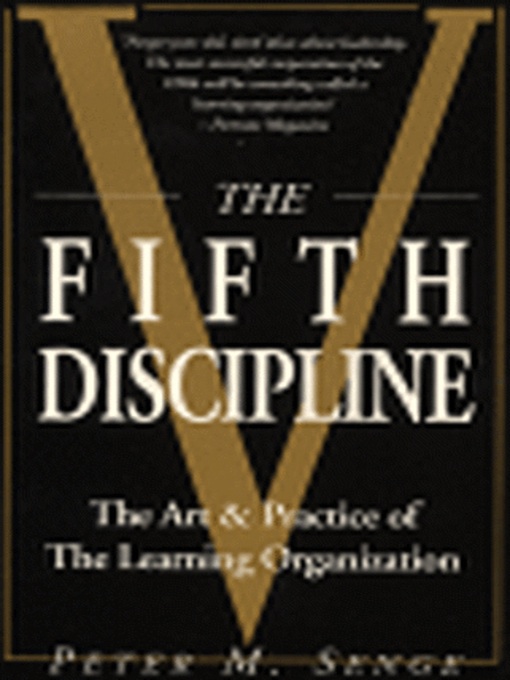
The Fifth Discipline by Peter Senge
Peter Senge's groundbreaking ideas on building organizations have made him a household name amongst corporate managers. His theories help businesses to clarify their goals, to defy the odds, to more clearly understand threats, and to recognize new opportunities. He introduces managers to a new source of competitive advantage, and offers a marvelously empowering approach to work.


Mastery of Senge's five disciplines enables managers to overcome their obstacles to growth and creates brave new futures for them and their companies. The five disciplines are drawn from science, spiritual wisdom, psychology, the cutting edge of management thought, and Senge's own work with top corporations that employ his methods.